title

WISHES ON FORMATION OF SEPARATE STATE OF TELANGANA - dedicated to the MARTYRS

Saturday, July 31, 2010

KCR live show at 7:30pm in RAJ NEWS (01/08/10),....

(01/08/10)  THE TIGER OF TELANGANA (as said by BBC)  KCR live show in RAJ NEWS at 07:30pm...all telanganites watch it........
no cable connection or sattelite telivision viewers watch in below link.....
http://www.yupptv.com/raj_news_live.html

JAI TELANGANA
JAIJAI TELANGANA

Friday, July 30, 2010

12 out of 12 expected.....but the majority is rather intresting.....

Constituency.......................candidate..............................majority
sirpur...................................Kaveti sammaiah......................15229
Chennur...............................Nallela Odelu................... ......44284
Dharmapuri..........................Koppula Eshwar......................58891
Mancherial...........................G.Aravind reddy......................77922
Nizamabad..........................Lakshmi narayana.................    11981
Warangal(west)....................Vinay bhasker..........................67809
Huzarabad...........................Eetala rajendar..................32014(lead)
Ella reddy............................ravinder reddy...................10700(lead)
Korutla................................Vidyasagar rao..................18974(lead)
Sircilla..................................K.T.Rama rao..................25645(lead)
Vemulawada........................Chennamaneni ramesh..............50361
Siddepet..............................T.Harish Rao............................95858

 12 out of 12......expected in telangana bye elections 2010 but the majority is rather intresting to note that the majority of Harish rao and Aravind reddy has broken the record of the highest majority of assembly constituency in andhra pradesh of Dr.Y.S.R.........so we Telanganites believe that this result of bye-elections is a refferendum to the telangana agitation......and also this will be a record to sri krishna committee of what the opinion of telangana people.......and this also provides a lobbing part of telangana people to the congress high command and to smt.Sonia gandhi as she will be intrested more in lobbing.......as this provides a strong feeling that we telanganites are for telangana  i request samikyandhraits to rethink about this issue and please cooperate with us to form our own state of telangana......bcoz not only win that matters but see the majority of votes margin with which each candiadte has won and in most of the constituencies the opposition parties of this bye-elections viz. congresss and tdp has lost the deposits as they did not get atleast 1/6th of the total votes polled....for example in our warangal tdp party has recieved only 1 vote in 38 division as that division corporater is of tdp so that only man has voted for tdp in that 38th division...so see the power of telangana people ...... of this all constituencies all are more concerned about nizamabad constituency as pcc president D.Srinivas has contested in that but our telangana people has voted and resulted in the loosing of D.srinivas instead his money and man power ...a bjp candiadte Laksnarayana being a bjp party candidate has won there as the majority of voters of nizamabad are muslim minority and as muslim don't support bjp party usually...but for telangana muslims too has voted for bjp and paved way for the win of laksmi narayana.......so see the power of telangana as muslim people supported a bjp candiadte for the cause of telangana........so i thank all those muslim people instead of their duty to do that........so now on being our expected result we should move our agitation on so on and we should move it on to the village and mandal level....and we sholud be ready for the agitation after december 31st if sri krishna committee gives a negative response....so i request you all telanganites to be ready for that ..........
JAI TELANGANA
JAI JAI TELANGANA

Sunday, July 18, 2010

Hyderabad CM Burgula Views about merger......

Original script


printed form of that letter:


From:
Burgula Ramakrishna Rao
Chief Minister
Hyderabad


To:
Shri U. N. Dhebar
President
Indian National Congress
New Delhi.


My dear Dhebarbhai,


What I am writing to you just now is in the nature of an interim report. Shri Bhargava is flying to Delhi tomorrow and I thought I should write to you lest the whole thing should be rather late. Yesterday and today I had the advantage of meeting a number of persons in individual and representative capacities. This morning both Shri Bhargava and myself had a little round of villages round about Hyderabad. It is not so very easy to assess the views
of the people in any manner that can be called accurate. Besides the time at our disposal is so short that we have to do the assessment in a great hurry. Subject to these considerations I am giving below the assessment of the situation as I see it. There is, no doubt, considerable agitation in Telangana on this important question. When I say considerable, it is of course nothing of
the type we come across in Bombay. The agitation this side is spread over the whole province and not restricted only to cities. My estimate of the views of the people of Telangana is that the people by majority would desire Telangana to remain a separate state. There is a strong section of the people holding the other view, that is in favour of Vishalandhra, but the majority is decidedly in favour of retaining Telangana as a separate province as recommended by the S.R.C. The actual breakdown of views I shall try to give in a fuller report that I
shall be sending from Bombay. There should, however, be no doubt in anybody's mind that the majority opinion is inclined towards a separate
Telangana Province.

I shall now briefly summarise the pros and cons of the situation. Those who desire the formation of Vishalandhra support their view on the following considerations:
1. Many of them would have desired the retention of Hyderabad State as it is at present, but since this is broken in linguistic pieces and since the big two pieces have gone to their respective linguistic units, the third also, viz. Telangana, should go to the large Andhra province.
2. The slogan of Vishalandhra has been in the field for a long time. It had its emotional appeal. In Hyderabad it represented the urge to break away from the feudal system. Hence they believe that Vishalandhra be formed to satisfy that urge.
3. The supporters of the Cultural Integration feel that it is better that two Telugu-speaking people living in contiguous areas should come together. For them there is a great cultural advantage in a bigger province. This is entirely an emotional approach to which a section of the literary people attach considerable importance.
4. In a bigger province, the expenditure of administration becomes less. Duplication and overlapping can be avoided. This is one important point in favour of Vishalandhra. There can be one Governor, one High Court, one Public
Service Commission and many other departments can be reduced as compared to their double strength just now for two provinces.
5. There is also a belief that in a larger province there may be a larger scope for industrial development etc. The enumeration of these points is rather illustrative than exhaustive. Those who are strongly agitating for the retention of Telangana as a separate province do so for, amongst others, the following reasons:-
1. They believe that the emotional urge for Vishalandhra has been considerably weakened after the formation of the separate Andhra state. It will further weaken with the creation of Telangana which is purely a Telugu state. There is
no agitation of a strong character in Andhra on this subject while there is a strong agitation in Telangana not to merge with Andhra.
2. If a separate Telangana is formed, it will not practically upset anybody. Ideologists and the people with emotional approach will be a little disappointed but there will be no agitation. On the contrar if Telangana is compulsorily merged with Andhra there will be considerable bitterness in Telangana with no adequate advantage on the other side.
3. Telanganites feel that apart from being Telugus they have built up their own way of life during the last 175 years. This way of life is in many respects different from the way of life of the Telugus in Andhra. The merger, they fear, will destroy this way of life. That is why they are worried.
4. Quite a large number of Telanganites are Urdu-knowing and Urdu-speaking people. For more than a hundred years Urdu has had its place in the life of the people. The administration is carried on in Urdu, records are maintained in Urdu, courts conduct their proceedings in Urdu, lawyers and other professionals carryon their work in Urdu. They are, naturally afraid that the merger would
take away the importance of Urdu in their life. They do not like this prospect.

5. Educationally Telangana is very backward as compared to Andhra. They are particularly backward in the study of English for which there are either no facilities or very poor facilities. They are, therefore, afraid that in the matter of service in a bigger province, they will be at a terrific disadvantage. While there are thousands of graduates and M.A's in Andhra, there are not even a few hundreds in Hyderabad. No guarantees can level up this great deficiency. Services, therefore, are afraid of an adverse effect of the merger.
6. Economically, Telanganites are afraid that they will be sufferers in Vishalandhra. On an ave rage, Telanganites are poor people. They have no money reserves as some people in Andhra have. They are afraid there would be an immediate exploitation in land and even in trade, small and big. They have got many instances where Telugus from Andhra do not hesitate to exploit the Telugus from Telangana economically when they get an opportunity to do so. This is by far their biggest fear.
7. Although the language is common, there are instances that there is no love lost between the Telugus in both the states. The classical example of this mutual dislike can be found in the attitude of Andhra officers during the Razakar agitation and immediately after the accession of Hyderabad. While, they say, the Marathi, Kannads and other officers were comparatively kind to the people of Hyderabad, Andhra officers were particularly harsh and unrelenting. There are bad memories left. These memories are so fresh in the minds of the Telanganites that they do not want to be at the mercy of their brethren in Andhra.
8. The Communists and the Communalists, as in similar cases in other parts of India, having made common cause in demanding Vishalandhra, the other sections are rather doubtful whether it would lead to the happiness of the people on both sides. They believe that for the Communists and Communalists, it is a political game. They are not sincere in their support of a larger province.
9. Those who desire a separate Telangana as recommended by the S.R.C. are prepared, as they say, for any test to ascertain the wishes of the people. They claim that in a test it can be found that a larger majority of Telanganites are
opposed to the merger. They also claim that if elections are held on this issue they would not yield even a single seat either to the Communists, the Communalists or even the sponsors of Vishalandhra.

I have sketchily summarised some of the pros and cons of the situation. It would be wrong on my part to give any opinion of mine. I have kept my mind open on the subject. I have summarised the situation in an objective and dispassionate manner. I shall write more about this in my fuller review of the situation from Bombay. I may however, add one thing that in case Telangana is kept a separate unit there is no harm in having common aspects of the administration common. For example, the Governor, High Court, and the public service commission can be common for both units. I write this subject to the decision of the high command in this respect.


With my kindest personal regards


Yours sincerely,
Sd/-
B. Ramakrishna Rao


Saturday, July 17, 2010

warangal west...........JAI TELANGANA

వరంగల్, జూలై 14 : వరంగల్ పశ్చిమ నియోజకవర్గ టీఆర్ఎస్ అభ్యర్థి దాస్యం వినయభాస్కర్‌కు ఓ మహిళా ఓటరు ఓటేస్తానని వాగ్దానమే కాదు రూ.10వేల విరాళం ఇచ్చి ఆశ్చర్యపరిచారు. బుధవారం హన్మకొండలోని ఇందిరానగర్‌లో ప్రచారం నిర్వహిస్తోన్న వినయభాస్కర్‌కు సిరమల్లే కవిత అనే మహిళా ఓటరు తిలకం దిద్ది, రూ.10వేలను విరాళంగా అందజేశారు. మహిళలు బోనాలతో ప్రచారం నిర్వహించారు. నాలుగు రోడ్ల కూడలి వద్ద వినయ్‌భాస్కర్‌కు ఓటేస్తామని ప్రతిజ్ఞ కూడా చేశారు.

మమ్మల్ని విసిగించకండి... ఓ ఇంటి యజమాని ఉత్తరభావం
ఎన్నికల ప్రచారంలో నాయకుల ఎత్తులకు ఓటర్లు పై ఎత్తులు వేస్తోన్నారు. బుధవారం 48, 49 డివిజన్లలో పలు కాలనీల్లో ఇళ్ల యజమానులు ఓట్లు అడిగే నేతలకు 'గమనిక'ల రూపంలో తమ మనసులోని భావాల్ని ఇళ్ల ముందు అతికించారు.

 "గమనిక..! దయచేసి మమ్మ ల్ని విసిగించకండి. మా ఓటు ఎవరికి వేయాలో నిర్ణయం జరిగిపోయింది. తెలంగాణ కోసం రాజీనామా చేసిన అభ్యర్థికే మా ఇంటి ఓట్లు. ఇట్లు, ఇంటి యజమాని''
 అని స్టిక్కర్‌ను అతికించడం గమనార్హం.

Sunday, July 11, 2010

INDIA's EVMs ARE VULNERABLE TO FRAUD......


Security Analysis of India’s Electronic Voting Machines
Hari K. Prasad J. Alex Haldermany Rop Gonggrijp
Scott Wolchoky Eric Wustrowy Arun Kankipati Sai Krishna Sakhamuri Vasavya Yagati
NetIndia, (P) Ltd., Hyderabad The University of Michigan
April 29, 2010

Abstract:
Elections in India are conducted almost exclusively using electronic voting machines developed over the past two decades by a pair of government-owned companies. These devices, known in India as EVMs,have been praised for their simple design, ease of use, and reliability, but recently they have also been criticized because of widespread reports of election irregularities. Despite this criticism, many details of the machines’ design have never been publicly disclosed, and they have not been subjected to a rigorous, independent security evaluation. In this paper, we present a security analysis of a real Indian EVM obtained from an anonymous source. We describe the machine’s design and operation in detail, and we evaluate its security, in light of relevant election procedures. We conclude that in spite of the machine’s simplicity and minimal software trusted computing base, it is vulnerable to serious attacks that can alter election results and violate the secrecy of the ballot. We demonstrate two attacks, implemented using custom hardware, which could be carried out by dishonest election insiders or other criminals with only
brief physical access to the machines. This case study contains important lessons for Indian elections and for electronic voting security more generally.

1 Introduction
India is the world’s largest democracy. In recent national elections, more votes were cast than the combined population of the United States and Canada [55], and the vast majority of voters used paperless directrecording electronic (DRE) voting machines [30]. Though paperless DREs have been largely discredited in the academic security literature (e.g., [7, 8, 12, 13, 20, 31, 32, 39]), Indian election authorities continue to insist that the electronic voting machines used in India, widely referred to as EVMs, are fully secure. For example, the Election Commission of India, the country’s highest election authority, asserted in an August 2009 press statement: “Today, the Commission once again completely reaffirms its faith in the infallibility of the EVMs. These are fully tamper-proof, as ever” [27]. As recently as April 26, 2010, Chief Election Commissioner Navin B. Chawla was quoted in the media as saying the machines were “perfect” with no need for “technological improvement” [3]. To justify these claims, officials frequently cite the design of the EVMs, which is vastly simpler than that of most other DREs used globally, and a series of procedural safeguards. However, the details of the machines’ design have been a closely guarded secret, and, until now, they have never been subjected to a rigorous independent security review.
In this paper, we analyze the security of India’s EVMs and related procedural safeguards. We show that while the machines’ simplicity makes them less susceptible to some of the threats faced by DREs studied in prior work, it also subjects them to a different set of highly dangerous attacks. We demonstrate two attacks that involve physically tampering with the EVMs’ hardware. First, we show how dishonest election insiders or other criminals could alter election results by replacing parts of the machines with malicious
look-alike components. Such attacks are made far simpler and cheaper by the EVMs’ minimalist design, and they could be accomplished without the involvement of any field-level poll officials. Second, we show how attackers could use portable hardware devices to extract and alter the vote records stored in the machines’ memory, allowing them to change election outcomes and violate ballot secrecy. This attack is technically straightforward because the EVMs do not use even basic cryptography to protect vote data internally. It could be carried out by local election officials without being detected by the national authorities or the EVM manufacturers’ agents.
Though EVM manufacturers and election officials have attempted to keep the design of the EVMs secret, this presents only a minor obstacle for would-be attackers. There are nearly 1.4 million EVMs in use throughout the country [29], and criminals would only need access to one of them to develop working attacks. Dishonest insiders or other criminals would likely face less difficulty than we did in obtaining such access. There are many other possibilities for manipulating Indian EVMs, both with and without the involvement of dishonest election insiders. Depending on the local context and security environment, the nature and scale of potential manipulations may vary, but neither the machines’ simplicity nor their secret design keeps them
safe. This study establishes that the EVMs used in India are not tamper-proof and are susceptible to a range of attacks. The use of similar paperless DREs has been discontinued in California [9], Florida [33], Ireland [1], the Netherlands [22], and Germany [11]. Indian election authorities should immediately review the security procedures now in place and should inspect all EVMs for evidence of fraud. Moving forward, India should consider adopting a voting system that provides greater security and transparency, such as paper ballots. Research Contributions
1. We present the first rigorous, independent security analysis of the electronic voting system used in India and find significant security flaws that compromise the integrity of results and the secrecy of the ballot. These machines use a vastly different design than most other DRE voting systems studied in the literature, and we describe it in greater detail than was previously available to the public.
2. We explore the role of simplicity in electronic voting security. Previous studies have focused on problems caused by software complexity and have proposed minimizing the size of the trusted computing base (TCB) as a partial remedy [51]. India’s EVMs use an extremely simple design with a small software TCB, yet we find that this makes physically tampering with the devices relatively easy. These findings underscore that the problems with DREs are due not only to complexity but also to lack of transparency.
3. We perform the first major security study of an electronic voting system used in an emerging nation. Voting systems in India must satisfy different constraints than systems used in the United States and Europe, which have been the focus of research to date. The Indian EVM manufacturers are exporting machines to other countries, including Nepal, Bhutan [2], and Bangladesh [41]. Mauritius, Malaysia, Singapore, Namibia, South Africa and Sri Lanka are reportedly considering adopting similar systems [2]. We outline some of the challenges of deploying electronic voting in an emerging nation. This provides a starting point for future
research into designing voting systems that meet the needs of these countries. Outline The remainder of this paper is organized as follows. In Section 2, we review how electronic voting
was introduced in India, describe how EVMs are used in elections, survey reports of fraud, and describe the EVM hardware based on our examination and experiments. In Section 3, we present two demonstration attacks that we developed. In Section 4, we survey a number of ways that the EVM system can be attacked in spite of—and sometimes due to—its simple design. Section 5 discusses current procedural countermeasures and why they are ineffective or even harmful. We place our work within the context of previous electronic voting security studies in Section 6. Finally, we draw conclusions and consider the way forward in Section 7.

2 Background
2.1 Electronic Voting in India The Election Commission developed India’s EVMs in partnership with two government-owned companies, the Electronics Corporation of India (ECIL) and Bharat Electronics Limited (BEL) [49, pp.1,9]. Though these companies are owned by the government, they are not under the administrative control of the Election Commission. They are profit-seeking vendors that are attempting to market EVMs globally [2]. The first Indian EVMs were developed in the early 1980s by ECIL. They were used in certain parts of the country, but were never adopted nationwide [49, p.1]. They introduced the style of system used to this day, including the separate control and ballot units and the layout of both components. These first-generation EVMs were based on Hitachi 6305 microcontrollers and used firmware stored in external UV-erasable PROMs along with 64kb EEPROMs for storing votes. Second-generation models were introduced in 2000 by both ECIL and BEL. These machines moved the firmware into the CPU and upgraded other components. They were gradually deployed in greater numbers and used nationwide beginning in 2004 [49, p.1]. In 2006, the manufacturers adopted a third-generation design incorporating additional changes suggested by the Election Commission.
this work is done by J. Alex Halderman, Hari K. Prasad, Rop Gonggrijp
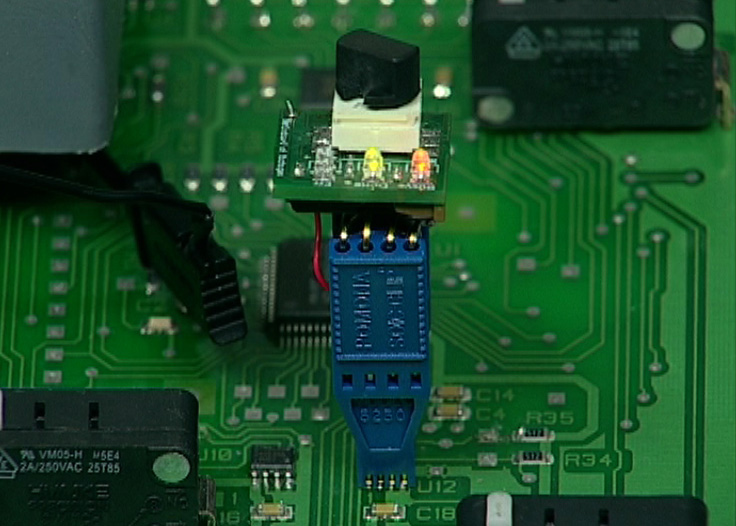
This is the reason for TRS and common people of TELANGANA to rethink about the use of EVM's in the upcoming bye elections..as this paper show that the EVM's are that transparent to the public as they should be.....if a voter casts a vote then how can be confident that he voted to a particular candiadate that he wants to vote......? and this article shows that we can tamper the EVM's easily within seconds by interchanging chips and LED's....and also we can decide whose going to win with help of bluetooth software or by using a pin on IC memory device......so Election commission of INDIA should have a look on this and make sure that this doubts should be cleared before using EVM's in an election.....
you can watch the tampering videos in youtube.......

so election commission of india should clear this doubts and then use EVM's in TELANGANA bye election ...we the people of TELANGANA demand it as the vote is the most important tool for a citizen in a democracy....
JAI TELANGANA
JAI JAI TELANGANA

Thursday, July 8, 2010

TELANGANA freedom fighters..


KOMARAM BHEEM

Komaram bheem was born in family of Gonda Tribals in the forests of Adilabad. he was not exposed to the out side world and didn not have any formal education
Bheem was inspired by Alluri Sitaramaraju, and his heart was aflame when he heard the death of Bhagat Singh. Realising that the time was near to revolt against the the Nizam Government's wild official injustice, Komaram Bheem became a veritable deity, raging with the fire of revolt.
Talukdar Abdul Sattar failed to bring Bheem to kow-tow his line. Abdul Sattar, well equipped with ninety policemen armed with guns, attacked Bheem, who did not have any armour to protect himself. On that fateful full moon night, hundreds of followers of Bheem armed themselves with bows, arrows, swords and spears. The fearless Gonds launched a frontal assault, from just a dozen feet away from the Nizam's police force, braved their guns, only to be riddled with bullets.
That night, the moon burnt like a flaming sun.
That night, the wild moonlight became a veritable stream of tears.
That night, the martyr Komaram Bheem became a deity and eternal hero to the Hindu community.
Komaram Bheem is Trible leader who fought against the erstwhile Asaf Jahi Dynasty for the liberation of Hyderabad State at the Beginning of the 20 th century .In telugu, he is known as Komaram Puli
The birth of the liberation movement originally took place when Hindus, be it villagers (Gramvasis), forest-dwelling tribals (Vanavasis) or city-dwellers (Nagaravasis), were fed up of the atrocities of the Nizam of Hyderabad.
Under the Nizam's theocratic rule (as under the previous rule by the Sultans), Hindus were killed or forcibly converted in lakhs. Countless Hindu women and children were raped and carred away as sex slaves. Ancient Hindu temples were desecrated and destroyed and built over by mosques. Hindu names of cities were banned and Islamic Slave Names were imposed on cities, viz. Hyderabad, Nizamabad, Sikandarabad, Adilabad, Karimnagar, Zaheerabad, Musheerabad, Quthbullapur and so on.
As neither Vanavasis, Gramvasis or Nagaravasis were spared the Islamic oppression, it was obvious that all of them would rise up in revolt. A group of Hindu bravehearts together to protest these acts, and finally, took up violent means to counter the Nizam and safeguard the Hindu masses. Komaram Bheem is a bright flame that lit the fire of liberation amongst the people.

CHITYALA AILAMMA(1919 -1985)

There is nothing of my husband nothing of my son it is my name that has stood wherever i gothe sangham folk come and say ,'one should be like ailamma',Hailing from the chakali caste in palakurti village aillamma's struggle for land and her Resistance to the nizam's forces make her a legend of the telangana peasant struggle. As the repression on her grew, she became totally involve in the struggle, travelling form village to village to escape the police. undeterred by arrest and torure the determination and courage aillamma showed was Exemplary.

DAASARADHI KRISHNAMACHARYULU

Dasarathi Krishnamacharya (1926—1987) was poet laureate of Andhra Pradesh. His early works Agni Dhara (1949) and Rudra Veena (1950) contain ‘flaming verses spitting spumes of fire and ire’. His poetic expression “My dear dear Telangana is a million diamond studded Veena’ endears him to all who know his daring exploits in opposing autocratic rule of Nizam in pre-independence days. He suffered imprisonment and must have been happy with liberation of Telangana and formation a state for the Telugus. His second phase of poetic career was characterized by national fervour. The third phase reflects his humanism and versatility as a poet. He authored several poetry volumes and introduced Rubaiyat in Telugu.

SARDAR SARVAYI PAPANNA GOUD

Sardar Sarvayi Papanna Goud born in Goud Community at Khilashapur Village near jangaon in Warangal District. He fought against the Muslim rule in Telangana. He Constituted some mansions and protected the interest of poor. He lived During the Period of AurangaZeb Hsivaji conquered maharastra From Muslim rule and at the Same Time Papanna occupied Telangana area from Mughal Rule Between 1687 to 1724

K V RANGA REDDY

Konda Venkata Ranga Reddy popularly known as K. V. Ranga Reddy (born 1889, date of death unknown) is a former Deputy Chief Minister of Andhra Pradesh .He is a freedom fighter who fought the telangana rebellion against the nizams.He was born in pedda mangalaram near hyderbad.He is Father-in-law of Marry Chenna Reddy


KALOJI-
Naa Telangana Koti Ratanala Veena

More popularly known as Kaloji or Kalanna is a well known Indian freedom fighter and a political activist of Telangana.He is noted for his contributions in the social and literary fields. He won Padma Vibhushan..Kaloji was born in Madikonda village outskirts of Warangal
During his student days and later, he was deeply influenced by the popular movements of the time like the Arya Samaja Movement especially the civil rights part of it, the Library Movement and the Andhra Maha Sabha Movement. The fraternal care and affection of his elder brother kaloji ramesh rao a noted Urdu poet, has also played a vital role in shaping the personality of Kaloji. Kaloji participated in Andhra MahaSabha activities since its formation in 1934. He was also associated with the Arya samaj He actively participated in the freedom movement of the erstwhile Hyderabad State and underwent imprisonment under the Nizam He has also participated in various social, political and literary activities in Ap.
His active involvement with the masses and their problems and his tireless struggle for their emancipation have naturally earned him in equal measure the love of the people and the wrath of the powers that be. He is one of those select freedom fighters of our country who were imprisoned by the feudal lords and the alien rulers before the attainment of Indian Independence and by the native leaders thereafter.

RAAVI NARAYANA REDDY

Raavi Narayana Reddy is a Famous indian communist freedom fighter . A member of Andhra Mahasabha, Raavi Narayana Reddy was one of the Top Leaders of the Telangana Rebellion led by the Communist Party of India (CPI) against the Cruel rule of the Nizam king. He was born june 5, 1908 in Bollepally, Bhongiri Mandal, Nalgonds District Hyderabad State.During 1946-1951, Telangana Saw peasant guerilla armed struggle launched under the aegis of the communist party of india (CPI), led by Raavi Narayana Reddy, The Andhra Mahasabha Had Allied Itself With The CPI which had strong roots in the Telangana COUNTRY SIDE

Saturday, July 3, 2010

Why,only HINDI........?


Before the merger of Andhra and Telangana as AP....Andhra was under the presidency of Madras state under British rule and Telanagna was under the presidency of Nizam state and not under the British rule....So in Andhra the officaial language is English as of Britsishers but in TELANGANA the official language is Urdu(Hindi) under the Nizam presidency.....So after the mergence of Andhra and Telangana as Andhra Pradesh ....the Samikyandhra govt has made Telugu as first and official language....and as Hindi(Urdu) was not a language in Andhra before mergence so after the mergence the Samikyandhra govt has made Hindi as second language and made the pass marks of that (Hindi) language as 18 (eighteen) as that language was not known to them before mergence ...but in Telangana region English was not known before mergence as that is not as official language...why the govt has not made the pass marks of English subject as 18 but it is 35.......this is simple domination of Samikyandhra govt on education sysytem in united AP.....as simple as that as hindi is not known to andhra people they made pass mark as 18 ...and as english is not known to Nizam state before mergence why they did not made the pass marks as 18....? but now it is 35........This is the domination of Samikyandhra govt on TELANGANA region.........

JAI TELANGANA
JAI JAI TELANGANA